Struggling with Chronic Prostatitis? These Time-Tested Chinese Herbal Formulas May Help
Chronic prostatitis is a frustrating and often stubborn condition that affects many men, causing symptoms like frequent urination, pelvic discomfort, and fatigue. While Western medicine commonly focuses on symptom control using antibiotics or anti-inflammatory medications, Traditional Chinese Medicine (TCM) offers a more holistic perspective. Some master TCM doctors have developed targeted herbal formulas that can address different subtypes of prostatitis by looking at the body's energy imbalances. Below are three effective herbal prescriptions used by notable Chinese medicine practitioners, depending on the root pattern of your condition. Whether your type is due to damp-heat accumulation, liver qi stagnation, or spleen qi deficiency with dampness, there’s a solution that targets your unique symptoms.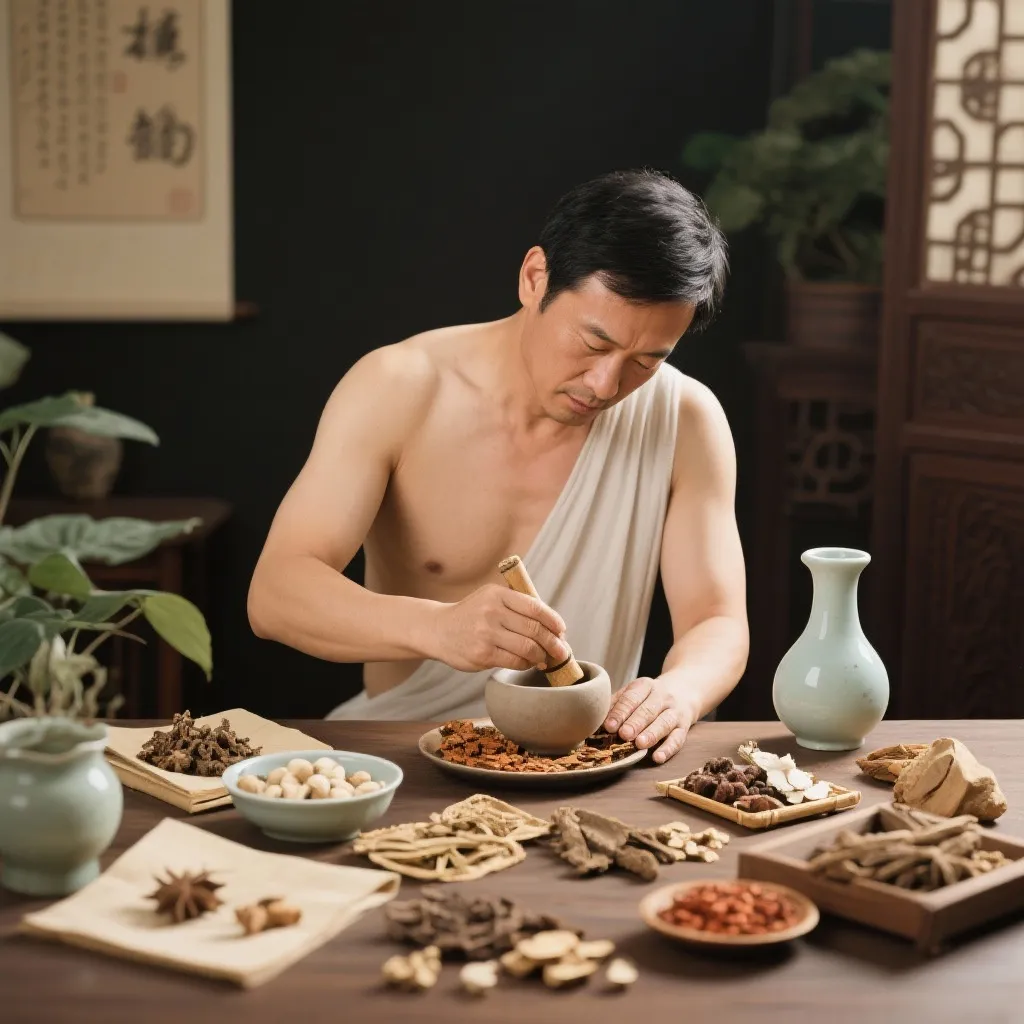
Damp-Heat Pouring Downward: Clear Heat and Promote Urination
Main Symptoms: Frequent, urgent, or painful urination, burning sensation in the urethra, lower abdominal and perineal heaviness with occasional testicular pain, a sweaty scrotum, yellowish urine, white discharge from the urethra, sticky bitter taste in the mouth, red tongue with yellow greasy coating, and a taut rapid pulse. Prescription: - Angelica (Dang Gui) 15g - Japanese knotweed (Hu Zhang) 15g - Plantago seed (Che Qian Zi) 15g - Achyranthes root (Niu Xi) 15g - Moss herb (Cao Xian) 15g - Zhejiang fritillary (Zhe Bei Mu) 8g - Patrinia (Bai Jiang Cao) 25g - Coix seed (Sheng Yi Ren) 25g - Sargentodoxa vine (Hong Teng) 25g - Prepared aconite (Pao Fu Pian) 3g - Dianthus (Qu Mai) 8g - Gardenia fruit (Zhi Zi) 8g - Gleditsia spine (Zao Ci) 8g Instructions: Boil all herbs with water, drink the decoction in three servings throughout the day. One dosage per day. Functions: Clears heat, eliminates dampness, cools the blood, and improves blood circulation. Safety Note: Avoid excessive or long-term use of Coix seed and Ginkgo seed (Bai Guo), especially Ginkgo—be sure to remove the germ/core before use. Ginkgo should never be consumed in large amounts or over extended periods.Stagnant Liver Qi and Dampness: Relax the Liver and Move Qi
Main Symptoms: Difficulty urinating, urinary hesitation or frequency, discomfort or dull pain in the lower abdomen and perineum, emotional tension, irritability, sighing, insomnia, or anxiety. Tongue may be pale or slightly dark with thin or greasy yellow coating, pulse may be wiry, slippery, or choppy. Prescription: - Angelica (Dang Gui) 12g - Poria (Fu Ling) 12g - Atractylodes (Bai Zhu) 12g - Japanese knotweed (Hu Zhang) 12g - Bugleweed (Ze Lan) 12g - White peony (Bai Shao) 8g - Bupleurum (Chai Hu) 8g - Black turmeric (Tai Wu) 8g - Green tangerine peel (Qing Pi) 8g - Gleditsia spine (Zao Ci) 8g - Zhejiang fritillary (Zhe Bei Mu) 6g - Licorice root (Gan Cao) 5g - Patrinia (Bai Jiang Cao) 25g - Coix seed (Sheng Yi Ren) 25g - Albizia bark (He Huan Pi) 25g - Sargentodoxa vine (Hong Teng) 25g Instructions: Boil with water and take in three portions throughout the day. One dose per day. Functions: Soothes the liver, regulates energy (qi), drains dampness, and activates blood circulation. Ideal for prostatitis driven by stress or emotional suppression.Spleen Qi Deficiency with Dampness: Energize the Spleen, Lift What’s Sinking
Main Symptoms: Feeling of incomplete urination, dribbling after urination, weak urine flow, or white discharge at the end of urination. Accompanied by fatigue, soft stools, low appetite, sweating easily, pale swollen tongue with teeth marks, thin or greasy white coating, and weak or soggy pulses. Prescription: - Codonopsis (Dang Shen) 12g - Astragalus (Huang Qi) 12g - Poria (Fu Ling) 12g - Alisma (Ze Xie) 12g - Fox nut (Qian Shi) 12g - Rosa laevigata (Jin Ying Zi) 12g - Angelica (Dang Gui) 12g - Atractylodes (Bai Zhu) 12g - Aged tangerine peel (Chen Pi) 10g - Sweet flag (Shi Chang Pu) 10g - Ginkgo seed (Bai Guo) 10g **(Remove core/germ before use; avoid prolonged use)** - Siler (Fang Feng) 5g - Notopterygium (Qiang Huo) 5g - Cinnamon twig (Gui Zhi) 5g - Cimicifuga (Sheng Ma) 3g Instructions: Prepare as a decoction and drink in 3 divided doses daily. Functions: Strengthens the spleen and promotes energy, raises yang qi, and dispels dampness. A supportive formula for men with chronic fatigue and weak digestion experiencing prostatitis.When to Use These Formulas
These herbal treatments are best suited for individuals who have received a confirmed diagnosis of chronic prostatitis and whose pattern matches the symptoms and tongue/pulse signs above. Ideally, consult a licensed TCM practitioner for a proper evaluation and customized treatment. TCM is highly personalized, and though these formulas are time-tested, they work best when tailored to the individual’s pattern.What the Research Says
Emerging studies support the role of herbal therapy in chronic prostatitis: - Chinese herbal formulas have shown anti-inflammatory and immunomodulatory effects in relieving prostatitis symptoms [(PMID: 28475158)](https://pubmed.ncbi.nlm.nih.gov/28475158/) - Coix seed and Patrinia have demonstrated antimicrobial and damp-resolving effects specific to urogenital conditions [(PMID: 31064993)](https://pubmed.ncbi.nlm.nih.gov/31064993/) - Aconite (Pao Fu Pian) used in small doses can aid yang warming when carefully administered under supervision [(PMID: 29424298)](https://pubmed.ncbi.nlm.nih.gov/29424298/)Quick Self-Check & Rescue Plan
If → You feel a burning sensation during urination, fatigue, or pain in the perineum...Then → Brew a cup of coix seed + Patrinia + red vine daily for 3 days. Feel relief or consult a TCM practitioner.
If → You’re emotionally tense, urinating in stops and starts...
Then → Combine Albizia bark with Bupleurum and drink it warm in the evening for calming effects.
If → You feel bloated, tired, and still have post-urination dribbling...
Then → Try one decoction with Codonopsis, Astragalus, and Bai Zhu to lift your energy.
For informational purposes only. Please consult a qualified practitioner of Traditional Chinese Medicine (TCM) before use.