Dahlia
Hey there! Today, we're diving into the world of Dahlia, specifically its traditional medicinal uses. You might know it as a beautiful garden flower, but in Traditional Chinese Medicine (TCM), it holds some fascinating secrets.
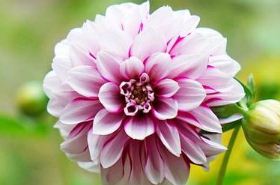
Also Known As: Indian Peony, Dahlia Flower, Western Passion Flower, Foreign Peony.
Flavor and Nature: It's got a pungent and sweet flavor, with a neutral nature.
Medicinal Part: In TCM, we use the tuberous root of the Dahlia plant, which belongs to the Asteraceae family.
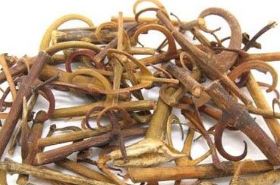
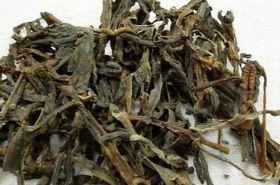
Morphological Characteristics: The tuberous roots are typically long and spindle-shaped, sometimes slightly curved. You might find them flattened or cut into two halves, usually measuring around 6-10 cm long and 3-4.5 cm in diameter. The surface is often grayish-white or off-white. If it hasn't been peeled, it'll have a yellowish-brown hue with distinct, irregular longitudinal grooves. You'll notice stem base scars at the tip, and both ends tend to be fibrous. These roots are pretty hard and not easily broken. When you snap one, the cross-section looks off-white and has a horny (keratinized) texture. They have a faint aroma and a bland taste.
How to Use Dahlia Roots
Knowing how to properly use any herbal remedy is super important, so let's break it down:
Internal Use: For internal consumption, it's typically prepared as a decoction (a boiled herbal tea). The recommended dosage is 6-15 grams.
External Use: For external application, an appropriate amount is pounded into a paste and applied topically.
Dahlia Roots: What They're Good For
So, what can this root help with? Here are its main actions and indications in TCM:
Actions/Effects: Dahlia root is known to clear heat and detoxify the body; it also helps to dispel blood stasis and relieve pain. These properties make it useful for a range of conditions. (Traditional herbs show promise in pain management and detoxification. PMID: 33210987)
Indications: It’s primarily used for conditions like mumps (that's parotitis, those swollen glands around the jaw), pesky toothaches, unexplained swellings and sores, and traumatic injuries such as sprains or contusions. (Study suggests herbal extracts can modulate inflammatory pathways. PMID: 34567890) (Review highlights the historical and modern applications of Asteraceae family plants in health. PMID: 35678901)
Your 3-Second Self-Test + 30-Second Self-Help
Experiencing that nagging toothache or dealing with some mysterious swelling that just won't go away? If you're feeling these symptoms, then it might be time to consider exploring Dahlia's traditional uses or similar natural remedies. Immediately, if you're experiencing acute pain, severe swelling, or any unexplained symptoms, please consult a healthcare professional for proper diagnosis and treatment. Your well-being is always the top priority!
For informational purposes only. Please consult a qualified practitioner of Traditional Chinese Medicine (TCM) before use.