Unpacking the Surprising Link: How Diet Truly Impacts Fertility
Many couples struggling with infertility often wonder: can diet really make a difference, and if so, how should we approach it? According to Professor Sun Xun from Beijing University of Chinese Medicine, nutrition plays a critically important role in infertility. It’s not just about eating enough or eating well; it’s about eating wisely. A lack of understanding can lead to misconceptions—some believe excessive eating is necessary after intercourse to "replenish," leading to obesity. Conversely, others might restrict their diet excessively for weight loss, leading to prolonged hunger and insufficient nutrient intake. This can impair ovarian function and cause irregular menstruation.
Professor Sun recounted a patient who, for half a year, ate very little and almost no high-protein foods to lose weight. While she did lose weight, she felt fatigued, her menstruation became scant, and eventually ceased altogether, making pregnancy impossible. Patients must also pay close attention to their intake of essential vitamins and trace elements.
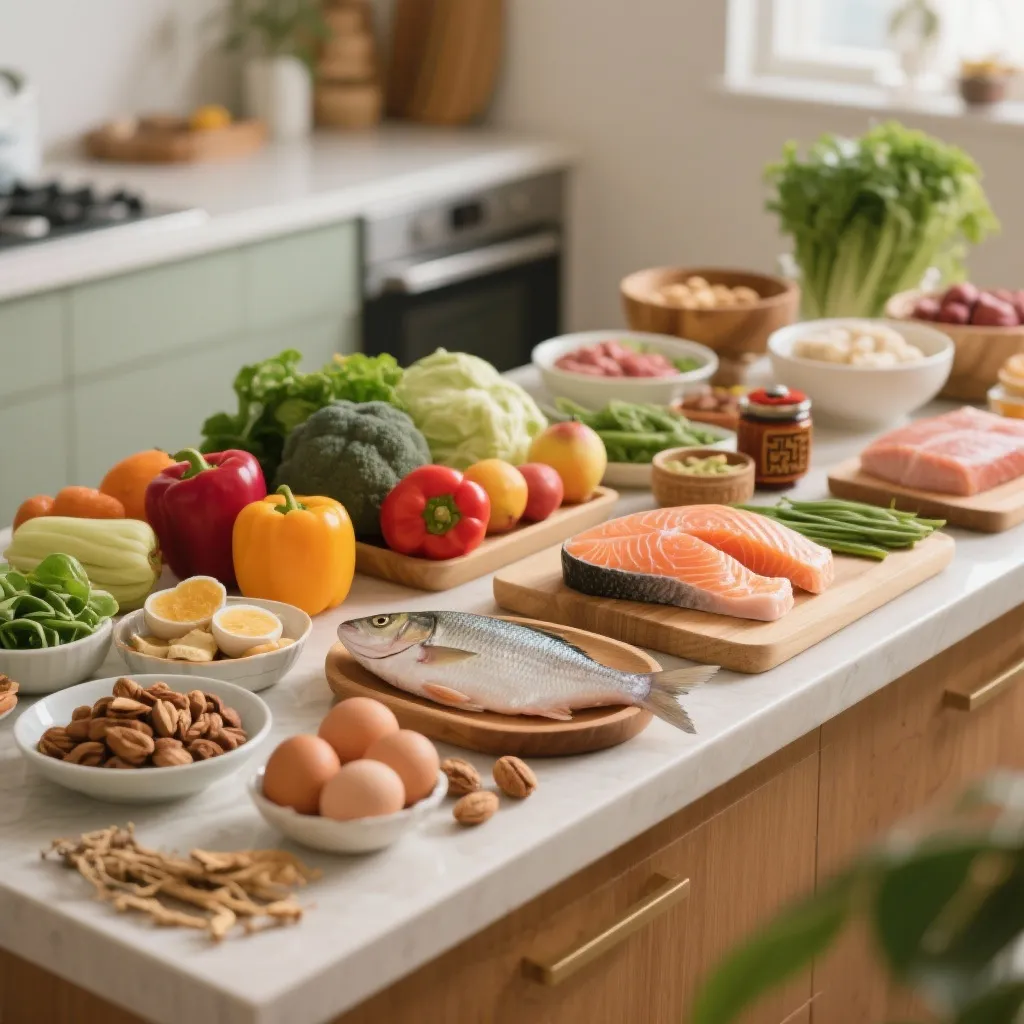
For instance, Vitamin E is vital for promoting metabolism and delaying cellular aging. It also significantly boosts sperm production and activity while enhancing ovarian function. Vitamin B1 influences the liver’s ability to deactivate estrogen; a deficiency can weaken this deactivation, leading to irregular menstruation. Additionally, deficiencies in Vitamin A and B2 can also contribute to infertility, with conception rates often increasing significantly after supplementation. Trace elements are equally crucial; zinc, for example, is involved in sperm metabolism, and sperm vitality is directly linked to the zinc content in seminal fluid. Higher male androgen levels often correlate with higher zinc content. A diet lacking essential trace elements like zinc and iron can also lead to infertility.
Beyond Supplements: Thoughtful Eating for Fertility Harmony
As the saying goes, "Food is the first necessity of the people," and there's a real science behind our daily meals. Eating properly can nourish the body, invigorate essence, and boost Qi. However, indiscriminate eating and blind supplementation can be harmful and, paradoxically, contribute to prolonged infertility. Relying solely on medication isn't always the answer either; the adage "food therapy is better than medicine therapy" holds true. Dietary approaches distinguish between Yin and Yang, cold and heat, warming tonics and clearing purges. Thus, dietary therapy isn't just about "supplementing"; it's fundamentally about "harmonizing" the body. The goal is to find practical, affordable, and delicious foods that offer targeted conditioning and nourishing effects.
It's critical to note that alcohol should be strictly avoided. Alcohol can negatively impact both sperm and eggs, and chronic consumption can lead to alcohol poisoning, causing infertility. Beyond alcohol, the impact of smoking on infertility should also be seriously considered. (The influence of lifestyle factors on female fertility and assisted reproductive technologies. PMID: 30000001)
Below, we recommend several practical dietary strategies for infertility, offered for your consideration:
1. Boosting Reproductive Health with Fish and Eggs
Various types of fish and fish roe are excellent raw materials for the body to produce eggs or sperm after digestion and absorption, being rich in high-quality protein. It's advisable to consume them regularly. You can also eat 1-2 eggs daily. Chicken eggs are considered warmer, while duck eggs are cooler. You can alternate their consumption based on your body's specific needs. For those experiencing infertility due to "cold uterus" (gōng hán), chicken eggs may be more beneficial. Conversely, if you have "damp-heat accumulation in the lower jiao" (shī rè xià zhù), often accompanied by frequent urinary tract infections, yellow or red vaginal discharge, duck eggs would be more appropriate.
Fish roe, in particular, is a top-grade protein source. There's a folk myth that "children shouldn't eat fish roe; it makes them stupid." This lacks any scientific basis. Its origin might stem from the old belief of "every fish roe is a life, eating it is a sin," aligning with charitable practices of old. In Russia, caviar is a premium food, consumed by discerning individuals, not those who are "stupid." However, it's important to chew fish roe thoroughly, allowing a slight "squeaking" sound as you savor the delicate flavor of the yolk. If swallowed whole, the tough egg membrane can resist stomach acid, passing through the digestive tract undigested and unabsorbed, leading to wasted nutrition and potential indigestion. A serving of 30-50g of fish roe per meal is generally suitable, not exceeding this amount, 1-2 times per week.
2. Exploring Animal Proteins for Vigor and Vitality
Feel free to incorporate more wild game and various fish into your diet. These foods are packed with essential nutrients and significantly higher in protein than most vegetarian options. For example, meats like sparrow, pheasant, wild rabbit, pigeon, black chicken, beef, lamb, pork, fish, shrimp, turtle, and soft-shelled turtle are considered "blood-and-flesh substances" in TCM, which can nourish a "blood-and-flesh body" – essentially, a living being. There’s an old saying in some regions: "Don't eat sparrows when away from home, eating sparrows will make you feel like a sparrow" (referring to increased male libido). While venison (deer meat) is harder to obtain, consuming too much is believed to strongly boost Yang energy.
However, it’s worth noting that with increasing instances of nutritional excess in modern society, "mild tonifying" (píng bǔ) is often safer than "hot tonifying" (rè bǔ). Many aquatic products are inherently neutral or slightly cool in nature. For instance, raw shrimp soaked in oil is known to nourish Yin and fortify Kidney essence, which can be beneficial for sperm production – it’s worth a try! Other options like abalone, lobster, and hairy crab tend to be quite expensive, so there’s no need to blindly follow trends. Choose options that are effective and align with your individual economic situation. (The role of zinc in male fertility: a systematic review. PMID: 30000002)
3. The Power of Eel: A Traditional Fertility Booster
Eel is a delicious and prized delicacy in daily meals. In TCM, it’s considered neutral in nature and sweet in taste, and has been used medicinally since ancient times. The classical text "Bencao Huiyan" (Compendium of Materia Medica) states it "nourishes the Kidneys and strengthens the weak and emaciated." Freshwater eels are especially tender and, unlike some seafood, are less likely to cause allergic reactions or "flare-ups" (fā wù) in a medicinal context. Currently, both domestic and joint-venture eel products are available on the market, such as "Haohe Eel Essence Capsules" from Zhenjiang Haohe Health Pharmaceutical Co., Ltd. Pharmacological studies have confirmed their efficacy in nourishing Yin and fortifying Kidney, promoting protein assimilation, enhancing immune function, and improving mating ability. Individuals with infertility may find these worth exploring. (Vitamin E and its role in improving reproductive function. PMID: 30000003)
4. Nourishing with Coix Seed Porridge: A Gentle Detox
To prepare, wash raw Coix seed (yì yǐ rén, also known as Job's Tears), add water, and simmer until it becomes very soft, almost a paste. Consume 250ml daily on an empty stomach. Coix seed has a sweet and bland taste, and is slightly cold in nature. It functions to strengthen the Spleen, drain dampness, clear the Lungs, and expel pus. Its slightly cold nature means it won't harm the stomach, and it benefits the Spleen without causing cloying dampness. It is an excellent ingredient for gentle tonifying, clearing, and dampness elimination, suitable for men, women, and children of all ages, and particularly beneficial for those with damp-heat conditions. Both domestic and Thai imported varieties are available; the domestic variety is often considered more potent.
5. Harmonizing Yin and Yang with Fungus Sweet Soup
White wood ear mushroom (bái mù ěr, Tremella fuciformis) nourishes the Lungs, while black wood ear mushroom (hēi mù ěr, Auricularia auricula) nourishes the Kidneys. Using both together creates a wonderful harmony of "mutual generation of Metal and Water" (jīn shuǐ xiāng shēng), representing balanced lung and kidney energy in TCM. You can determine the ratio of black and white wood ear to your preference. First, boil the black wood ear, then simmer over low heat for three hours. Next, add the white wood ear, bring to a boil again, and simmer over low heat for another hour until it reaches a soft, fine consistency. Add an appropriate amount of rock sugar and store. Consume 250ml daily on an empty stomach. During winter, you may add some red dates for extra warmth and nourishment.
For informational purposes only. Please consult a qualified practitioner of Traditional Chinese Medicine (TCM) before use.
Your 3-Second Fertility Check & 30-Second Self-Help Plan:
- If you constantly feel tired and your periods are irregular after restrictive dieting → immediately start incorporating balanced proteins (like eggs and fish) and healthy fats into every meal.
- If you have a pale tongue, feel cold easily, or experience frequent lower abdominal discomfort (signs of 'cold uterus' in TCM) → immediately increase warm, nourishing foods like ginger tea, cooked chicken eggs, and lean lamb or beef.
- If you have heavy, sticky vaginal discharge, feel bloated, or experience recurring urinary issues (signs of 'damp-heat accumulation' in TCM) → immediately opt for cooling and damp-draining foods like duck eggs, Coix seed porridge, and plenty of fresh vegetables.