Hello there! Many factors can contribute to infertility and subfertility, so it's always best to get a thorough check-up if you have concerns. People often use "infertility" and "subfertility" interchangeably, but medically speaking, they have distinct definitions. Around 85% of newlywed couples conceive within their first year of marriage.
Clinically, "infertility" is defined as a sexually active, non-contracepting couple of reproductive age who has been trying to conceive for two years (or one year, according to U.S. gynecology textbooks and the American Society for Reproductive Medicine) without success (PMID: 30419253). Conversely, "subfertility" (sometimes referred to as recurrent pregnancy loss) refers to a couple of reproductive age where the female has conceived but has been unable to carry a pregnancy to live birth due to repeated miscarriages, premature births, or stillbirths. When the male partner is the primary cause of either infertility or subfertility, it's termed "male infertility" or "male subfertility." Informally, people often use "infertility" as a broad term for both situations.
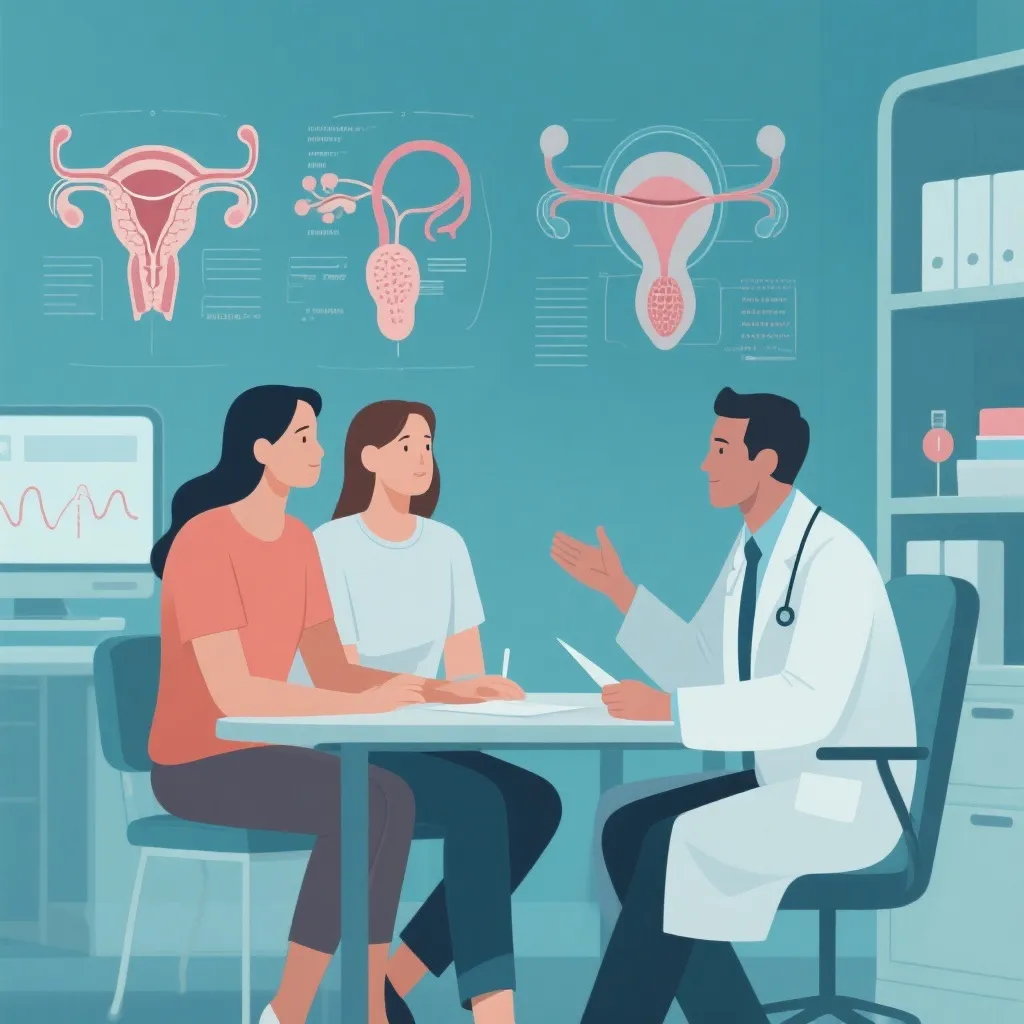
Thoroughly Investigating Your Medical History
A detailed medical history is the cornerstone of any effective infertility diagnosis. Your doctor will meticulously review various aspects of your health and lifestyle.
Delving into Your Personal History
- Chief Complaint: The duration you've been trying to conceive is crucial.
- Associated Symptoms: Any symptoms like significant weight changes (obesity), abnormal breast milk production (galactorrhea), or other endocrine-related issues.
Exploring Your Current Health Situation
- Menstrual Irregularities: Any history of abnormal menstrual cycles and treatments received.
- Abdominal Pain: Details regarding any recurring or significant abdominal discomfort.
- Sexual History: Information about the frequency and nature of sexual intercourse.
- Previous Evaluations: Any prior infertility examinations and their results.
Unpacking Your Menstrual Cycle
- Menarche: Age at your first period.
- Cycle Characteristics: Regularity, duration, and flow of your periods.
- Dysmenorrhea: Presence and severity of menstrual pain.
- Recent Cycles: Dates of your last three menstrual periods.
Reviewing Your Marital and Reproductive Journey
- Marriage Age: Your age at marriage.
- Contraception History: Details about past birth control methods and their duration.
- Abortion History: Any previous abortions, including dates, gestational age, and methods.
- Remarriage History: Information about any previous marriages.
- Prior Pregnancies: History of previous pregnancies, including any complications like difficult deliveries or postpartum hemorrhage.
Exploring Past Medical Conditions
- Chronic Illnesses: History of endocrine disorders, metabolic diseases (e.g., diabetes), psychiatric conditions, hypertension, or digestive system diseases, and any medications taken.
- Infections: Any history of inflammatory conditions or tuberculosis.
- Environmental Exposure: Exposure to X-rays or harmful substances.
- Surgical History: Details of any previous surgeries.
Carefully Conducting a Full Physical Examination
A comprehensive physical examination helps identify systemic issues that might contribute to infertility.
- General Assessment: Evaluation of growth and development, height, arm span, and weight.
- Glandular & Organ Check: Examination of the thyroid gland, heart, and abdomen.
- Secondary Sexual Characteristics: Special attention to the development of secondary sexual characteristics and any signs of galactorrhea.
Precisely Performing a Gynecological Examination
This focused examination assesses the health and structure of your reproductive organs.
- External Genitalia: Assessment of external genitalia development, pubic hair distribution, and clitoral size.
- Vaginal Health: Examination of vaginal color and the nature of vaginal discharge.
- Cervix: Checking for cervical inflammation.
- Uterus: Assessment of uterine position, size, and mobility.
- Adnexa: Palpation for any adnexal thickening, masses (size, texture, mobility), and tenderness.
Essential Basic Infertility Investigations
These initial tests provide fundamental insights into your fertility status.
- Basal Body Temperature (BBT): Tracking BBT can help identify ovulation patterns.
- Fallopian Tube Patency Test: Checks for blockages in the fallopian tubes, which are crucial for egg transport (PMID: 33139433).
Advanced and Specific Diagnostic Tests
If initial tests suggest an issue, more specialized investigations may be necessary to pinpoint the exact cause.
- Hormone Level Testing: If anovulation (lack of ovulation) is suspected, further testing of serum levels of Prolactin (PRL), Follicle-Stimulating Hormone (FSH), Luteinizing Hormone (LH), Estradiol (E2), and thyroid hormones (T3, T4) should be performed.
- Specialized Endocrine Tests: If needed, specific tests like the Progesterone Challenge Test, Estrogen Challenge Test, LH-RH Test, and Chromosome Analysis may be conducted.
- Endoscopic Examinations: Endoscopic procedures like hysteroscopy (examining the uterine cavity) or laparoscopy (examining pelvic organs) – or a combination of both – may be used as a final diagnostic step (PMID: 35182937).
- Ovarian Biopsy: In some cases, an ovarian biopsy might be necessary to confirm the cause and location of anovulation or the presence of eggs within the ovaries.
We wish you the very best in your journey!
(Original response date: October 4, 2009, 17:25:51)
If you would like more detailed health guidance and advice, please consult with our featured online experts!
References:
- (PMID: 30419253) ASRM Committee Opinion on the Current Definition of Infertility.
- (PMID: 33139433) The role of tubal patency tests in infertility workup.
- (PMID: 35182937) Diagnostic and operative hysteroscopy in infertility.
Your 3-Second Infertility Self-Check + 30-Second Self-Help Combo
- If you're under 35 and have been trying to conceive for over a year without success, then immediately schedule a consultation with your primary care physician or a fertility specialist.
- If you're 35 or older and have been trying for six months or more without success, then it's crucial to seek prompt medical advice from a fertility expert.
- If you're feeling overwhelmed or anxious about the process, then remember that early diagnosis is key, and open communication with your partner and healthcare provider is your best next step.
For informational purposes only. Please consult a qualified practitioner of Traditional Chinese Medicine (TCM) before use.