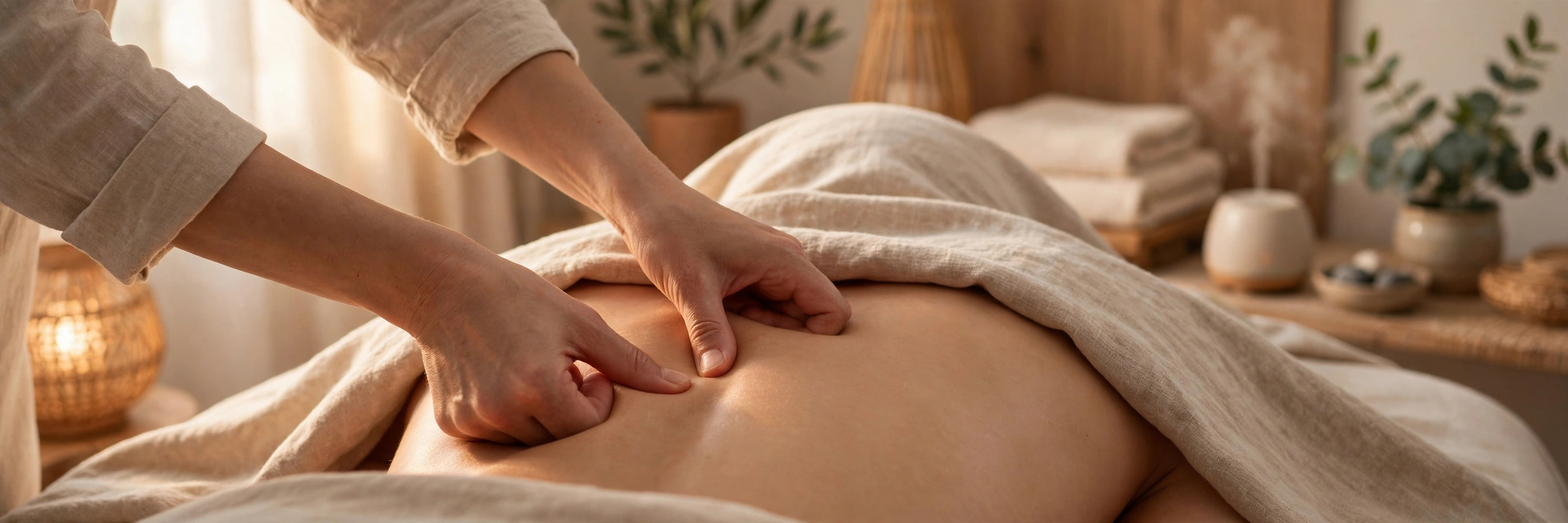
If acupuncture is Chinese medicine with needles and herbal medicine is Chinese medicine with plants, tui na is Chinese medicine with the hands. Tui na (推拿) is a form of therapeutic massage and bodywork that has been part of traditional Chinese medicine (TCM) for more than two thousand years. It is used for muscle and joint pain, stiffness, stress, and general wellbeing — and it is one of the least understood TCM practices outside China. This guide explains what it is, what a session feels like, what the research says, and how to stay safe.
Push and Grasp: What the Name Means
The name itself describes the work. Tui (推) means to push, and na (拿) means to grasp or lift. Together they name a system of hand techniques applied to the muscles, joints, and the pathways called channels that run through the body.
Tui na is one of the main branches of TCM, alongside acupuncture, herbal medicine, and movement practices such as qigong and tai chi. Its earliest descriptions appear in the Huangdi Neijing (Yellow Emperor's Inner Classic), the founding text of Chinese medicine, and it has been practiced in hospitals and clinics in China ever since. In China, tui na is often offered in hospitals as part of regular care, sometimes alongside acupuncture in the same visit.
The Hands' Vocabulary
A tui na practitioner works with a set of named hand techniques, each with its own movement and purpose. Beginners do not need to memorize them, but knowing the main ones helps you understand what is happening during a session:
- Tui (pushing): the palm or thumb glides firmly along a muscle or channel, in one direction, often repeated many times.
- Rou (kneading): the palm or fingers press in small circles, working into a muscle the way you would knead dough.
- An (pressing): steady, direct pressure held on a point or a tight spot, then released.
- Gun (rolling): the back of the hand or the fist rolls quickly over a broad area, often used to warm up large muscles such as the back.
- Nie (pinching and grasping): the fingers lift and squeeze a fold of muscle, then let go, in a rhythmic motion.
- Mo (rubbing): light, circular rubbing, often used at the start or end of a session to relax the area.
A session also often includes gentle stretching and moving the joints through their range of motion. The practitioner may use a little oil or balm on the skin, or work through clothing. Sessions are usually given with the patient lying on a table, though some techniques are done seated or standing.
What a Session Feels Like
One of the first differences from a spa massage is that you usually stay dressed, in loose, comfortable clothing. A session typically lasts thirty to sixty minutes. The practitioner begins by asking about your health and the problem you want help with, and may check your tongue and pulse in the usual TCM way.
The pressure ranges from gentle to firm. Some techniques feel soothing; others, especially pressing into a tight muscle or a tender point, can feel intense — a deep ache that eases as the muscle lets go. This is normal, but pain is not the goal: a good practitioner checks in with you and adjusts the pressure. Afterward, mild soreness for a day is common, much like the feeling after a good workout. Most people feel looser and more relaxed, and some feel sleepy.
Tui na is often combined with other treatments. In a TCM clinic, it is common to receive tui na and acupuncture in the same course of care, with the two supporting each other. It is also sometimes used on its own for people who prefer not to have needles.
What the Research Says
The research on tui na is growing, but it is still much smaller than the research on acupuncture, and the honest picture is mixed. Systematic reviews — studies that pool the results of many trials — have found that tui na may help with some kinds of musculoskeletal pain, including low back pain, neck pain, and shoulder pain. Some trials report improvements in pain and movement that compare well with other hands-on treatments.
But the quality of the evidence is a real limitation. Many trials are small, and reviewers often note problems with blinding — it is hard to design a convincing fake massage — and with inconsistent techniques between studies. Because of this, most reviews conclude that tui na looks promising for muscle and joint pain, but that larger, better-designed trials are needed before strong claims can be made. That is a fair summary, and it is also the reason this guide avoids big promises: the practice is old and widely used, but the modern evidence is still catching up.
Tui Na and Regular Massage: What's Different
From the outside, tui na can look like any other massage. The difference is the framework behind it. A spa massage is usually given to relax the whole body. A tui na session is usually given for a specific problem, and the practitioner chooses techniques based on TCM ideas: the channels running through the body, the flow of qi, and the pattern behind the complaint — a stiff neck, for example, might be treated not only at the neck but along the channels connected to it.
That framework also shapes how tui na fits with the rest of TCM. It shares the same diagnostic language as acupuncture and herbal medicine, and it is often used together with movement practices such as tai chi and Ba Duan Jin, which keep the body moving between sessions. None of this makes tui na better or worse than other forms of massage — it makes it a different tradition, with its own logic, and the choice between them is a matter of what suits you.
Safety and Who Should Be Careful
Tui na is generally low risk when given by a trained practitioner, but a few cautions apply. Do not receive tui na over a broken bone, an open wound, a skin infection, or an area with a blood clot, and tell the practitioner if you have severe osteoporosis, take blood thinners, or have had recent surgery. Strong pressure on the abdomen is usually avoided during pregnancy, and the practitioner should be told if you are pregnant. If you have a serious medical condition, talk to your doctor first.
As with any hands-on treatment, the practitioner's training matters. In China, tui na practitioners train in TCM schools and hospitals. In other countries, regulation varies: some places license tui na specifically, others regulate it under general massage therapy, and some have no specific regulation at all. Before booking, ask about training and experience, and about how the practitioner would approach your particular problem. Be cautious of anyone who promises to fix a serious illness, or who uses force that hurts rather than the deep ache that eases.
A Balanced View
Tui na is a hands-on tradition with a long history and a modest but growing body of research — most encouraging for muscle and joint pain, and most in need of larger trials. It is practical, drug-free, and usually pleasant, with low risk when given by someone trained. If you are curious, the best way to learn is to try one session with a qualified practitioner and notice how your body responds, keeping expectations realistic and your doctor informed.
If these ideas resonate, Huangdi Neijing: A Modern Introduction explains the classical foundations — the seasons, the body's rhythms, and the habit of living with the year rather than against it — in clear, beginner-friendly language (Huangdi Neijing: A Modern Introduction).
This article is for general wellness education and is not medical advice.