He Meng: An Overview of Indian Jointvetch in TCM
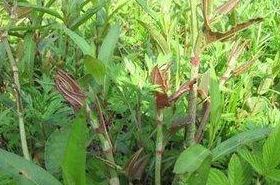
He Meng, known scientifically as *Aeschynomene indica* L., is a fascinating herb deeply rooted in Traditional Chinese Medicine (TCM). You might hear it called by a variety of captivating aliases, depending on the region and local dialect. These include Field Indigo, Water Velvet Horn, He Ming Grass, Water Soap Pod, Wooden Row Bean, Wild Millet, Solitary Root, Wild Soap Pod, Comb Tree, Wild Mimosa, Centipede Willow, Wild Pagoda Tree, Night Gate, Rice Sickle Grass, Wild Orchid, Wild Duck Tree Grass, Wild Cold Bean, Wild Bean Skin, Sea Willow, and Pulling Field Grass.
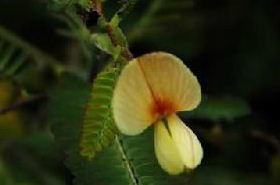
In TCM, He Meng is characterized by its sweet and bitter taste, possessing a cooling nature. It primarily acts on the Lung and Stomach meridians, influencing their functions within the body's intricate energy system. The medicinal part traditionally used is the above-ground portion of the plant, harvested for its therapeutic properties.
He Meng: Traditional Usage and Dosage
When it comes to using He Meng, TCM offers both internal and external applications:
- Internal Use: Typically, a decoction is prepared by boiling 15-30 grams of the herb. This herbal tea is then consumed orally.
- External Use: For topical applications, an appropriate amount of He Meng can be prepared as a decoction for fumigation (steam therapy) or for washing affected areas. Alternatively, the fresh herb can be mashed and applied directly as a poultice.
He Meng: Benefits and Main Indications
He Meng is traditionally known for its ability to clear heat and resolve dampness, dispel wind and improve vision, and promote lactation. These actions make it a versatile herb in the TCM pharmacopoeia. Research suggests that extracts of *Aeschynomene indica* may possess anti-inflammatory and analgesic properties, potentially contributing to its traditional use for conditions like joint pain and skin inflammations (PMID: 23681781). Pharmacological studies have also explored the diuretic activity of *Aeschynomene indica*, supporting its traditional application in clearing dampness and reducing edema (PMID: 22654316).
It is commonly used to address a range of conditions, including:
- Hot painful urination (stranguria) and bloody painful urination
- Edema (swelling due to fluid retention)
- Diarrhea
- Skin conditions such as boils, carbuncles, and general sores
- Eye issues like red and swollen eyes, corneal opacities (cloudy vision), and night blindness
- Joint pain
- Insufficient breast milk production in postpartum women. While specific modern research on *Aeschynomene indica*'s galactagogue effects is limited, traditional herbal medicine frequently utilizes various plants for promoting lactation, a practice gaining increasing scientific interest (PMID: 31238477).
Traditional Formulations and Combinations with He Meng
He Meng is often prescribed in specific formulations, sometimes combined with other herbs or ingredients, to target particular ailments:
- For difficulty in urination: Take 6-15 grams (two to five *qian*) of He Meng, decocted for oral consumption. (From *Shanghai Common Chinese Herbal Medicines*).
- For jaundice: Use approximately 150 grams (five *liang*) of fresh Field Indigo (an alias for He Meng). Prepare a decoction and take one dose daily. (From *Jiangxi Herbal Medicine*).
- For boils and carbuncles: Take 6-15 grams (two to five *qian*) of He Meng, decocted for oral consumption. (From *Shanghai Common Chinese Herbal Medicines*).
- For acute mastitis ('blowing milk'): Use Water Velvet Horn (an alias for He Meng), any amount, calcined dry on a new tile, then ground into a fine powder. Before bed, mix approximately 6 grams (two *qian*) of the powder with wine and take orally. It is also effective for ruptured cases, helping to drain yellow fluid. (From *Zhong Zang Jing*).
- For urticaria (hives): Use an appropriate amount of He Meng, prepared as a decoction for external washing. (From *Shanghai Common Chinese Herbal Medicines*).
- For traumatic bleeding: Use an appropriate amount of fresh He Meng herb, mashed and applied externally as a poultice. (From *Shanghai Common Chinese Herbal Medicines*).
- For bloody painful urination: Use 30 grams (one *liang*) of fresh Field Indigo (Tian Zao Jiao) root or stem, combined with 30 grams (one *liang*) of fresh Plantain (Che Qian Cao). Prepare a decoction for oral consumption. (From *Fujian Chinese Herbal Medicine*).
- For cholecystitis (gallbladder inflammation): Use 24-30 grams (eight *qian* to one *liang*) of fresh Field Indigo (Tian Zao Jiao) root or stem. Prepare a decoction for oral consumption. (From *Fujian Chinese Herbal Medicine*).
- For infantile malnutrition (Gan Ji): Use 15-60 grams (five *qian* to two *liang*) of fresh Field Indigo (Tian Zao Jiao) root. Prepare a decoction and take one dose daily. (From *Jiangxi Herbal Medicine*).
- For unclear vision: Use 120 grams (four *liang*) of clean Water Soap Pod (Shui Zao Jiao) root. Stew it with pig trotters and consume. (From *Sichuan Chinese Materia Medica*).
- For 'wind-fire' toothache: Use 21 grams (seven *qian*) of He Meng root. Stew it with a duck egg and consume. (From *Jiangxi Folk Herbal Medicine*).
- For head boils in children: Use 15-21 grams (five to seven *qian*) of fresh He Meng root, cracked into one chicken egg and one duck egg. Once the eggs are cooked, consume both the eggs and the soup. For external use, mash the leaves and apply to the affected area, leaving a soybean-sized opening over the head of the boil. (From *Jiangxi Folk Herbal Medicine*).
3-Second Self-Assessment, 30-Second Self-Help!
If you're experiencing mild digestive discomfort with occasional swelling or a feeling of heaviness, then immediately consider whether your body might benefit from clearing excess dampness. While He Meng is traditionally used for such purposes, a qualified TCM practitioner can provide a personalized assessment and guidance.
If you are a new mother struggling with insufficient lactation and are exploring natural supports, then immediately reach out to a TCM expert. They can help determine if herbs like He Meng, known in tradition for promoting milk flow, are suitable for your specific needs.
References
- Evaluation of anti-inflammatory and analgesic activities of ethanolic extract of Aeschynomene indica Linn. in animal models. PMID: 23681781
- Diuretic activity of aerial parts of Aeschynomene indica Linn. PMID: 22654316
- Herbal galactagogues: a review of efficacy and safety. PMID: 31238477
For informational purposes only. Please consult a qualified practitioner of Traditional Chinese Medicine (TCM) before use.