# The Five Phases and Your Body
You have probably met the "five elements": Wood, Fire, Earth, Metal, and Water. The word "elements" is a little misleading. The Chinese term is wuxing (五行), which means "five movements" or "five phases." These are not building blocks of matter, like the elements of chemistry. They are five patterns of change that keep turning into one another, like the seasons of a year.
The Huangdi Neijing (黄帝内经, the Yellow Emperor's Inner Classic), the foundational text of Traditional Chinese Medicine, uses the five phases as a filing system for all of nature — and the human body is filed in it too. Each phase is linked to an organ system, a season, an emotion, a taste, and a climate. Learn the pattern, and a cold autumn day, a bout of worry, or a tight chest start to look like parts of one story.
This article goes further than our introduction to the five phases. Here we map the phases onto the body in detail, explain how the phases support and restrain one another, and suggest how a modern reader can use this system as a language for noticing — not as a diagnosis.
The Five Phases as Movements
Each phase names a quality of movement:
- Wood (木, mù) grows and reaches upward, like a tree pushing toward the light.
- Fire (火, huǒ) flares and rises, like a flame.
- Earth (土, tǔ) receives and nourishes, like soil that holds and transforms.
- Metal (金, jīn) contracts and clarifies, like metal drawn into shape.
- Water (水, shuǐ) flows downward and gathers, like a river running low.
Each phase is more a verb than a noun: growing, flaring, ripening, refining, storing. The classic says these movements run through everything — the year, the weather, the organs, the emotions. From the modern point of view, you do not need to accept this as biology to find it useful. Think of it as an organizing picture: five buckets into which the classic sorts experience, so that nothing feels isolated.
Your Body in Five Phases
The Neijing groups the body into five organ systems, each matched to a phase, a season, and an emotion. One note matters: the classic's "organs" are not quite the organs of modern anatomy. The Liver or Heart here is a functional system — a cluster of jobs the body does — rather than a single lump of tissue. Keep that distinction in mind.
Wood: Liver, Spring, Anger
Wood belongs to spring. Like trees pushing buds outward after winter, the Liver system governs smooth, outward movement — the free flow of qi (气, the vital energy) and blood, and the flexibility of the tendons. Its emotion is anger: energy rising and getting stuck, the same movement as Wood. The taste of Wood is sour, its color green — sour food, the classic says, can soften a rigid, stuck feeling in small amounts. Notice how the story matches experience: spring quickens plans, and frustration rises when plans get blocked.
Fire: Heart, Summer, Joy
Fire belongs to summer. The Heart system is the ruler — it "houses the spirit" (shén, 神), meaning it governs awareness, calm, and clear thinking. Its emotion is joy — more precisely, excess excitement: the overexcitement that leaves you unable to sleep or settle. A balanced Fire is warmth and presence; Fire running too hot is restlessness. The taste of Fire is bitter, said to cool overheated energy. Read it as a metaphor with teeth: summer's heat, late nights, and frayed nerves do tend to arrive together.
Earth: Spleen and Stomach, Late Summer, Worry
Earth belongs to late summer, the ripening time when crops are gathered. The Spleen system — a functional network, not the anatomical spleen alone — pairs with the Stomach as the center of digestion: receiving food, turning it into nourishment, carrying it upward. Its emotion is worry: overthinking, the mind chewing on the same thing again and again. The taste of Earth is sweet, its color yellow. Most people have felt their stomach knot when they ruminate; the classic simply made that observation a structural principle.
Metal: Lung, Autumn, Grief
Metal belongs to autumn. The Lung system governs breathing and the boundary between inside and outside — taking in fresh air, releasing the used, managing the skin and the body's defenses. Its emotion is grief. The classic's image: autumn is when things fall away, leaves drop, the year lets go. Grief is a kind of letting go too, and it lands in the chest. The taste of Metal is pungent (spicy-hot), its color white. The classic claims a connection, not a cause — grief does not "cause" a cough, but the two belong to the same phase, and the wise reader watches both.
Water: Kidney, Winter, Fear
Water belongs to winter. The Kidney system stores the body's deepest reserves — the classic's word is jīng (精), the essence: the inherited constitution, the deep fuel of growth and reproduction. Its emotion is fear: cold contracts and sinks, and fear makes us pull inward and go quiet. The taste of Water is salty, its color black (dark). The classic treats winter as the season to conserve — sleep longer, spend less, protect the reserves. Most of us feel the pull to rest more in dark, cold months; the Water phase is the classic's way of naming that same feeling.
The Correspondences at a Glance
| Phase | Organs (functional) | Season | Emotion | Taste | Climate | |---|---|---|---|---|---| | Wood | Liver, Gallbladder | Spring | Anger | Sour | Wind | | Fire | Heart, Small Intestine | Summer | Joy (in excess) | Bitter | Heat | | Earth | Spleen, Stomach | Late Summer | Worry | Sweet | Dampness | | Metal | Lung, Large Intestine | Autumn | Grief | Pungent | Dryness | | Water | Kidney, Bladder | Winter | Fear | Salty | Cold |
Read the table the way the classic intends: not as separate facts, but as columns that light each other up. Wind, anger, sour taste, springtime restlessness, and the Liver system are one movement wearing different clothes.
How the Phases Move: Generating and Controlling
The phases form a circle, and there are two ways they travel around it.
The generating cycle (shēng, 生 — "giving birth"). Each phase feeds the next: Wood feeds Fire (wood burns), Fire feeds Earth (ash becomes soil), Earth feeds Metal (ore is born in the earth), Metal feeds Water (metal gathers dew), Water feeds Wood (water nourishes trees). The classic uses this cycle to describe how the body sustains itself: one system supports the next, and health is nourishment passing smoothly around the circle.
The controlling cycle (kè, 克 — "restraining"). Each phase also checks the one it can overpower: Wood restrains Earth (roots break up soil), Earth restrains Water (banks hold the river), Water restrains Fire (water puts out flames), Fire restrains Metal (fire melts metal), Metal restrains Wood (the axe cuts the tree). When one phase runs too strong, another holds it in place.
Together, the two cycles are the classic's whole theory of balance: generate enough to keep things going, restrain enough to keep things from tipping. This is the yin–yang idea applied in five directions — nothing is ever simply "good" or "bad"; each phase is healthy only in proportion to the others. If Fire flares, is Wood feeding it too fast, or is Water failing to cool it?
From the modern view, this is systems thinking in ancient dress. Modern medicine also sees the body as feedback loops — one process feeds another and is checked by a third. The five phases express that insight in the language of seasons instead of signals and enzymes. Neither language is "right" in the other's terms; they are two maps of the same territory.
How to Use It
This system was never meant to sit in a book. It is a working language — a way to notice patterns and respond early, while small.
Name the phase before you name the problem. When you feel off, ask which phase is speaking: the stuck anger of Wood, the scattered overexcitement of Fire, the heavy overthinking of Earth? Naming the movement is itself calming — and more useful than the vague verdict "I'm stressed." The five phases give you five specific words instead of one foggy one.
Match your season. In Wood's spring, move your body and give plans room to grow. In Fire's summer, enjoy the light but protect your sleep. In Earth's late summer, eat simply and stop chewing over decisions at midnight. In Metal's autumn, breathe deeply and let some things go. In Water's winter, rest more and spend your energy like savings. Our guide to seasonal living walks through the year in more detail.
Use the cycles, not just the columns. If you are stuck in one phase, look at its neighbors. Grief (Metal) that will not lift may soften when you tend to Water (rest) or Earth (warmth, steady routine). Anger (Wood) may ease when you feed Fire (something warm and joyful) or let Metal do its job (let go of what you cannot control). The cycles are the classic's way of saying: never push directly against a strong force — support or restrain it from the side.
Keep it descriptive, not diagnostic. The five phases are a language for noticing patterns in your own experience. They are not a way to diagnose yourself or anyone else, and they do not replace medical care. If something in your body or mood persists or worries you, talk to a qualified professional — a doctor, and, if you are curious about the TCM view, a licensed practitioner who can read the whole picture, not just one phase.
Read this way, the five phases stop being a mystical list and become something plainer: a calendar of the body, a vocabulary for its weather, and a reminder that everything in you is connected to everything else — and to the season outside your window.
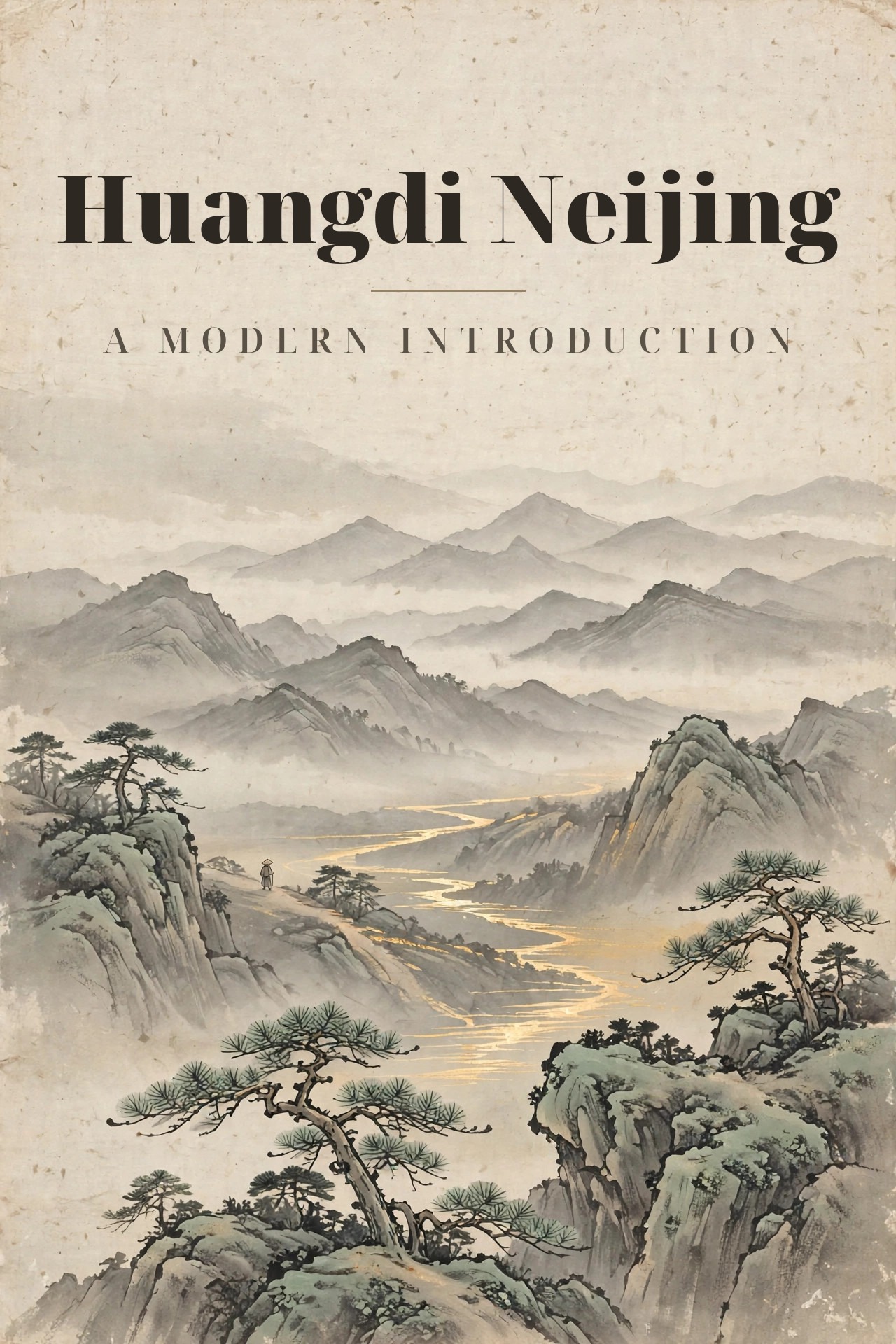
If you want to go deeper, Huangdi Neijing: A Modern Introduction walks through the classic chapter by chapter — 16 short chapters, 112 pages — with the original Chinese lines alongside plain-English explanations. → /books/huangdi-neijing-modern-introduction/