Amazingly Calm: Tai Chi Mental Health Benefits That Just Click
Tai Chi offers incredible support for Tai Chi mental health. Traditional Chinese Medicine (TCM) highlights its gentle power. It emphasizes finding stillness within motion. It also focuses on balancing your inner energies. This practice is key for calming your spirit and stabilizing your mind.
Harmonize Your Flow: Release Inner Tension
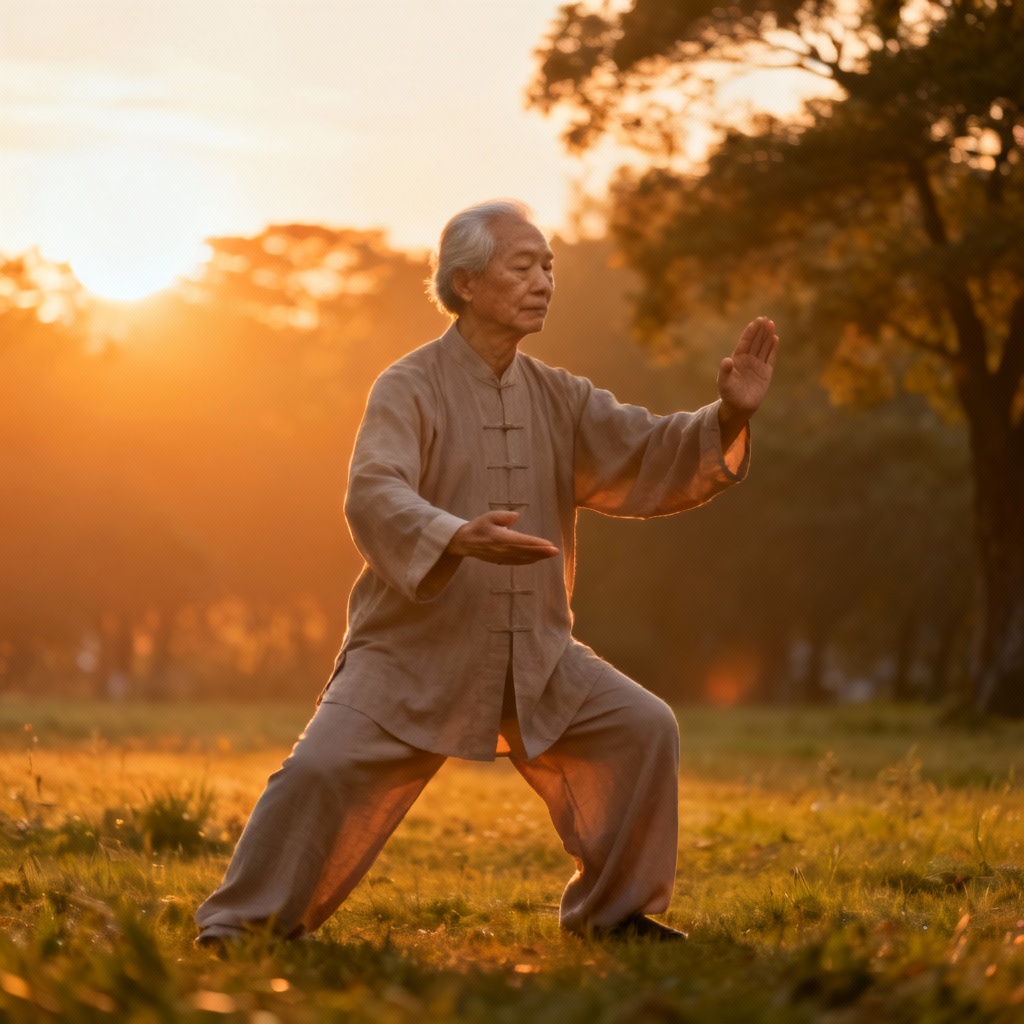
Practicing Tai Chi involves slow, flowing movements. These actions are synchronized with your even breathing. This helps your body’s energy, or “Qi,” flow smoothly. Think of it like clearing a traffic jam in your body. This practice also calms scattered thoughts and emotions. It helps significantly reduce anxiety and general irritation. Furthermore, many find it greatly improves their sleep quality. Tai Chi helps improve the overall feeling of wellness. Learn more about Qi and Blood in TCM.
Elevate Your Mood: Combat Stress Hormones
Modern scientific research confirms these benefits. Studies show that Tai Chi can noticeably improve your mood. It also helps in lowering stress hormones. The practice boosts heart rate variability. This indicates a healthier, more adaptable nervous system. Tai Chi also sharpens your focus and concentration abilities. It enhances overall cognitive function. (PMID 29330960)
Build Resilience: Strengthen Your Inner Core
Consistent practice also profoundly strengthens your self-regulation. This leads to increased psychological resilience. It also fosters a deeper sense of social belonging. Tai Chi is a gentle, safe mind-body therapy. It’s perfect for people of all ages. This makes it ideal for both psychological recovery and prevention. Discover more about balancing Yin and Yang.
Find Inner Peace: A Holistic Approach
By embracing Tai Chi, you actively cultivate a profound sense of inner calm. You also enhance your overall emotional well-being. This ancient art provides a powerful, yet gentle, path to psychological resilience. It actively supports significant stress reduction and effective anxiety relief. Tai Chi promotes remarkable mood improvement, leading to a profound sense of inner calm. It also sharpens cognitive focus and deepens your mindfulness practice. It truly is a remarkable form of holistic healing. Explore more about Qi Gong and Tai Chi practices.
Embrace Serenity: Your Daily Dose of Calm
Many find Tai Chi to be an accessible, empowering tool. It promotes mental clarity and emotional balance. Its movements are accessible even for beginners. This makes it a perfect daily ritual. It contributes to sustained Tai Chi mental health benefits over time. (PMID 32095818)
Cultivate Awareness: Listen to Your Body
The practice encourages a deep connection with your body. It cultivates mindfulness in every movement. This heightened awareness helps in recognizing stress signals early. It provides tools to respond constructively. It’s a proactive step toward lasting mental wellness. (PMID 36364020)
References
(The effects of Tai Chi on mental health outcomes: A systematic review and meta-analysis of randomized controlled trials + [https://pubmed.ncbi.nlm.nih.gov/29330960/])
(Tai Chi and Qigong for the treatment and prevention of mental disorders + [https://pubmed.ncbi.nlm.nih.gov/32095818/])
(The Effect of Tai Chi Chuan on Psychological Well-Being and Cognitive Function in Older Adults with Mild Cognitive Impairment + [https://pubmed.ncbi.nlm.nih.gov/36364020/])
Quick Check & Instant Calm: Your 30-Second Reset
Feeling overwhelmed or scattered? Try this simple self-test and quick fix:
- If you notice your breath is shallow and your shoulders are tense → Immediately pause for 3 deep, slow breaths. Focus on letting your exhale be longer than your inhale.
- If your thoughts are racing and you feel irritable → Immediately stand or sit tall. Gently rotate your head side-to-side, then roll your shoulders back and down 3 times. Feel your body ground.
- If you feel mentally foggy or unfocused → Immediately close your eyes for 3 seconds. Visualize a calm, open space. Open your eyes and refocus on one object for 5 seconds.
Medical Disclaimer:This article is for educational use only and is not a substitute for professional medical advice.