Effortlessly Embrace Calm: Your Guide to **Qigong for Hypertension Management**
Discover **Qigong for Hypertension Management**, a powerful complementary approach. This traditional practice effectively supports Western medicine and crucial lifestyle changes. Qigong thoughtfully combines controlled breathing techniques, gentle flowing movements, and deeply focused intention. It works to clear your body’s energy channels, *much like unblocking a traffic jam in your body’s internal highways*. This practice helps harmonize vital energy and blood flow. Ultimately, Qigong can calm overactive internal “Liver Yang” energy. These combined actions collectively assist in stabilizing your blood pressure. Learn more about Qigong and Tai Chi here.
Breathe Deeply: Improve Your Circulation
Regular Qigong practice significantly reduces mental stress and anxiety levels. It also lessens sympathetic nervous system activity within your body. This means your system feels less ‘fight or flight’ response. Long-term Qigong improves heart rate variability considerably. It also effectively enhances the elasticity of your blood vessels. Furthermore, this ancient practice aids much better sleep quality. It can assist with effective weight management and metabolic control. These benefits contribute significantly to overall cardiovascular wellness. For many, integrating **Qigong for Hypertension Management** into daily life offers profound benefits. (PMID: 29775087)
Move Gently: Boost Overall Wellness
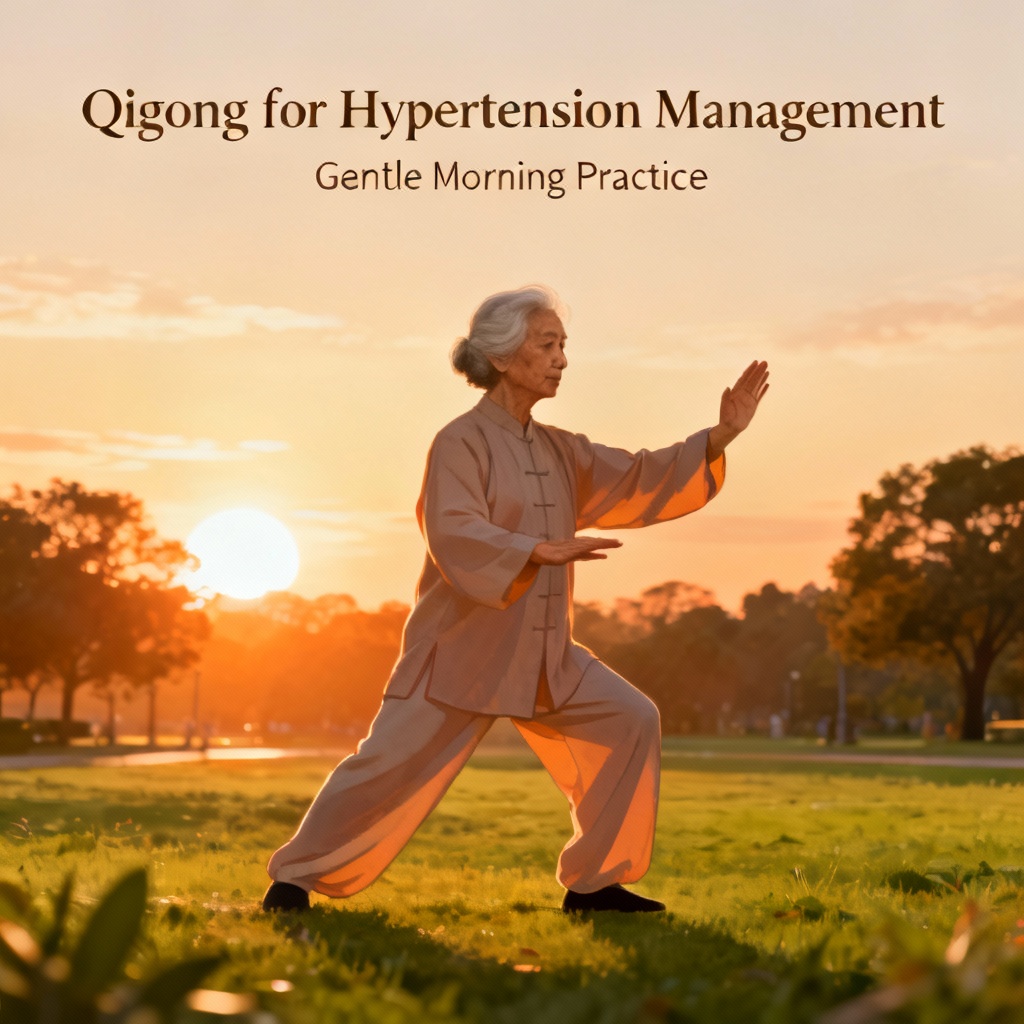
Popular Qigong forms include Baduanjin and the classical Yijinjing. Zhan Zhuang standing meditation and Tai Chi-style breathing exercises are also common choices. You should practice each session for 15 to 30 minutes. Aim for daily or at least every other day sessions. The key involves guiding your internal energy with focused intention. All movements must remain gentle, smooth, and flowing. Older adults can easily perform these exercises while comfortably seated. This makes **Qigong for Hypertension Management** incredibly accessible to many. It’s truly a natural way to balance blood pressure, offering a holistic approach to heart health. Practicing Qigong provides gentle exercise for cardiovascular support and acts as an effective mind-body practice. It serves as a complementary therapy for vascular health, a soothing technique for hypertension, a profound method for stress reduction, and ultimately, a powerful self-care tool. Explore more about healthy living practices. (PMID: 25419999)

Practice Safely: Ensure Your Well-being
Remember, Qigong is primarily a long-term self-care practice. It is not a quick fix or a substitute for medication. Always consult your trusted physician before starting Qigong. This consultation is especially important if your blood pressure fluctuates significantly. Also, seek medical advice if you are in a hypertensive crisis. It is crucial if you have severe cardiovascular conditions or brain diseases. If you experience dizziness during practice, stop immediately. Seek prompt medical attention for chest tightness or blurred vision. Your personal safety is always paramount during practice. For more on TCM Basics, click here. (PMID: 35914652)
References
(PMID: 29775087) A meta-analysis confirms that Qigong effectively lowers systolic and diastolic blood pressure.
(PMID: 25419999) Systematic review indicates Qigong significantly improves blood pressure and quality of life for hypertension patients.
(PMID: 35914652) Recent meta-analysis supports mind-body exercises like Qigong/Tai Chi as beneficial for hypertension management.
Ready to take control? Here’s a quick 3-second self-test and 30-second self-rescue combo for **Qigong for Hypertension Management**:
* If you often feel stressed or agitated: Immediately try 3 minutes of slow, deep diaphragmatic breathing. Focus solely on your breath to calm your system.
* If your shoulders are tense and your breath is shallow: Immediately perform 3-5 repetitions of gentle shoulder rolls and arm raises. Combine with intentional, relaxed exhales to release tension.
* If you’re looking for natural ways to support your cardiovascular health: Immediately explore introductory Qigong videos or classes to start your journey towards better blood pressure regulation.
Medical Disclaimer:This article is for educational use only and is not a substitute for professional medical advice.