If you’re dealing with persistent knee discomfort, **Tai Chi for Knee Pain** might be the answer you’ve been searching for. This ancient Chinese practice offers a gentle yet powerful way. It helps to alleviate soreness and improve your joint function naturally. Forget harsh impacts; Tai Chi embraces fluid, mindful movements.
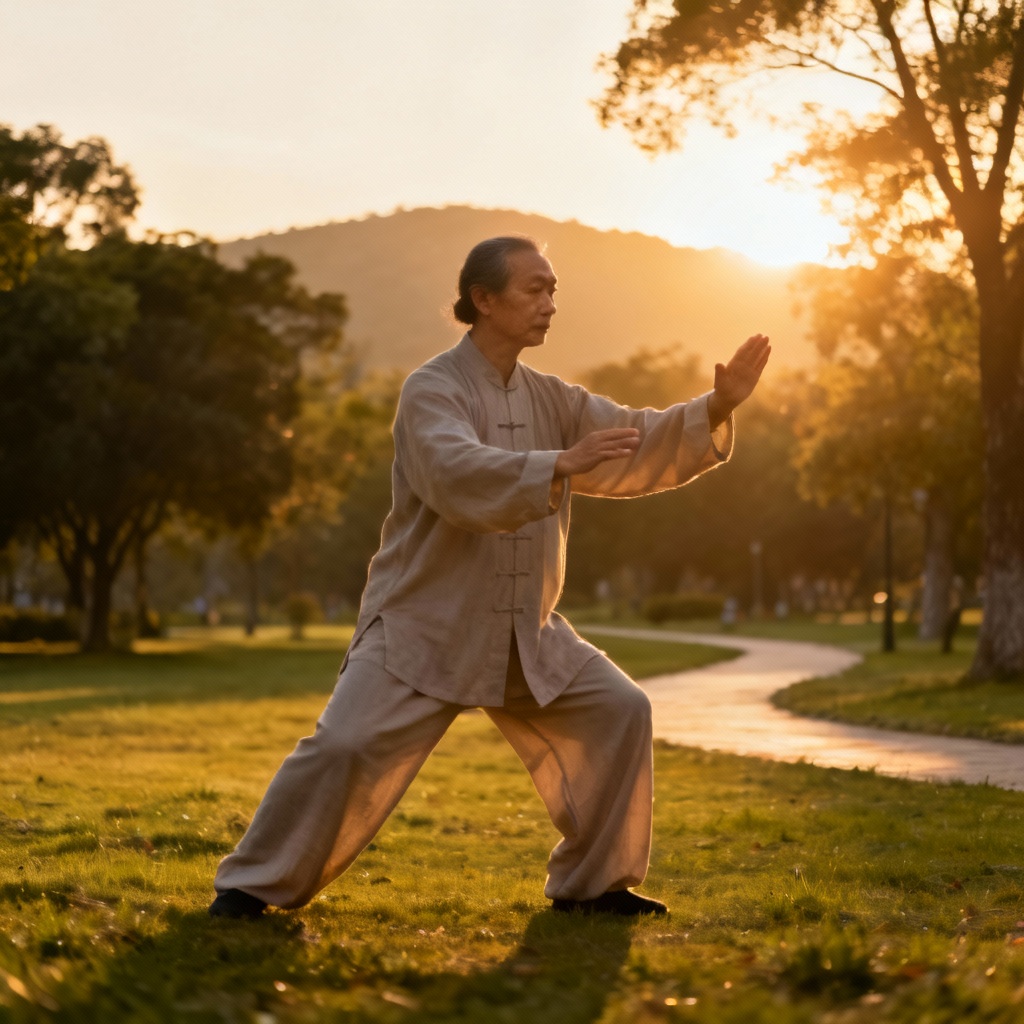
Finally Feeling Better, Faster: Unlocking the Power of Tai Chi for Knee Pain
Tai Chi is a traditional Chinese mind-body practice. It features slow, continuous, and rounded movements. This gentle therapy and fitness method aims to significantly reduce knee discomfort and pain. Traditional Chinese Medicine (TCM) sees Tai Chi as a way to enhance overall bodily harmony. It works by clearing out energy pathways, much like unclogging a drain in your body. This promotes smoother flow.
Boost Your Body’s Flow: Clearing Pathways for Comfort
From a TCM viewpoint, Tai Chi actively clears your meridians. These are the body’s subtle energy channels. It also helps to balance Qi (vital energy) and Blood circulation. This practice significantly strengthens your tendons and bones. Moreover, it actively lubricates your joints, improving their flexibility and ease of movement.
This approach is especially beneficial for knee pain stemming from Kidney energy deficiency. This means a general weakening of the body’s foundational energy, often associated with aging. It also helps with stagnant Qi and Blood flow. Tai Chi can also address “Bi Syndrome,” a condition where pain and stiffness arise from blockages in the body’s energy and blood flow.
Move Without Pain: Strengthening Muscles and Stability
Modern research supports Tai Chi’s effectiveness for knee discomfort. It shows this practice can reduce stress on your knee joints (PMID: 26034177). Tai Chi strengthens the muscles surrounding your knees. It also improves proprioception, which is your body’s sense of its position in space. This leads to better balance and a more stable gait.
The practice boosts local circulation around the knee. It also helps to lower inflammatory responses (PMID: 23648174). All these benefits collectively reduce pain and restore functional ability. This makes it an excellent option for long-term knee health and mobility.
Embrace Gentle Movement: Finding Relief in Every Step
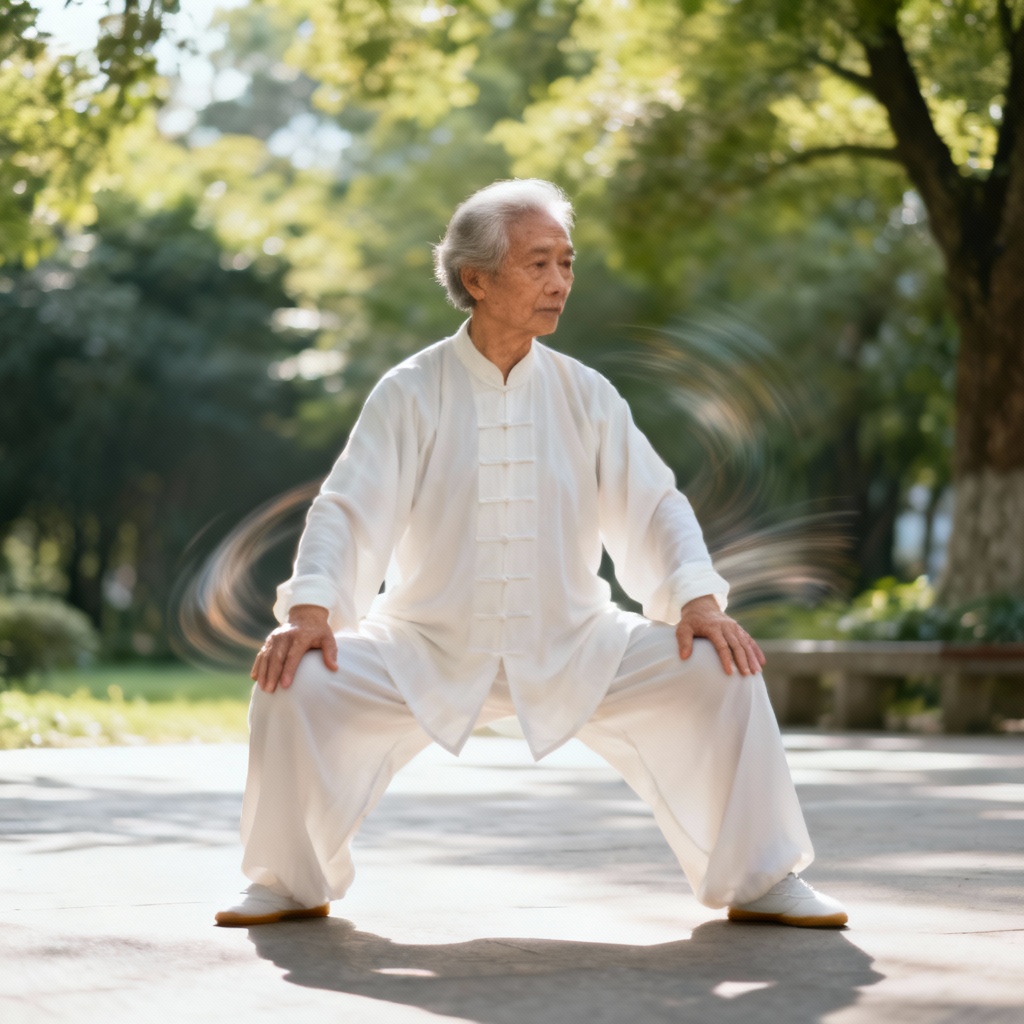
The core of Tai Chi involves slow, low-impact movements. Each session typically lasts between 20 to 40 minutes. We recommend practicing three to five times per week for optimal results. Consistency is truly key; long-term adherence yields the best outcomes. This ancient mind-body practice isn’t just about graceful movements; it’s a gentle exercise that acts as a moving meditation, helping to cultivate inner energy and promoting healthy flow-based movements to ease everyday aches. It’s a holistic therapy aimed at improving mobility challenges and addressing chronic knee issues through its slow, deliberate actions. Many find it a powerful tool for joint discomfort. (PMID: 30089851)
Listen to Your Body: Knowing When to Seek Help
While Tai Chi is generally very safe, it’s important to listen to your body. If you experience acute swelling or severe pain in your knee, consult a doctor first. Always seek professional medical advice before starting any new exercise regimen. Learn more about the general principles of TCM Basics to deepen your understanding of this holistic approach. For more details on this specific practice, visit our Qi Gong and Tai Chi section. Embrace the journey of **Tai Chi for Knee Pain** and reclaim your comfort.
References:
(PMID: 26034177, “Tai Chi can significantly reduce pain and improve physical function in individuals with knee osteoarthritis.”)
(PMID: 23648174, “Regular Tai Chi practice effectively alleviates chronic knee pain in older adults.”)
(PMID: 30089851, “Tai Chi demonstrates positive effects on knee osteoarthritis, including improved balance and reduced pain.”)
Ending Module:
Quick Knee Comfort Check-Up:
If your knees feel stiff after sitting for a while, immediately try this: Stand up slowly, gently sway side-to-side for 30 seconds, focusing on soft knees.
If you notice a dull ache after light activity, immediately try this: Place a warm, damp towel on your knee for 30 seconds, then gently pat the area.
Medical Disclaimer:This article is for educational use only and is not a substitute for professional medical advice.