Are you tossing and turning, craving restful sleep? Many people seek natural ways to find peace. This ancient Chinese practice, Qigong for Sleep, offers a powerful solution.
Gently Rebalancing Your Body: How Qigong Transforms Your Sleep
Qigong improves sleep by tuning your breath, body, and mind. It helps restore Yin-Yang balance within your system. This practice also smooths the flow of vital energy and blood. Clear energy pathways mean less tension, easing you into slumber. Think of “气滞” (Qi stagnation) like a traffic jam in your body. It blocks energy and keeps you on edge. Qigong helps clear these energetic roadblocks. It calms your mind and spirit, letting go of daily stress. This holistic approach significantly reduces shallow sleep, restless dreams, and early waking. You can discover more about the intricate balance of vital energy here: /tcm-basics/qi-blood/.

Breathe Deeply: Achieve Inner Calm
Qigong focuses on deep, intentional breathing patterns. These patterns slow your heart rate naturally. This action signals your body to relax deeply. Reduced physical tension follows. You will feel your stress melt away. A calmer mind promotes restful sleep.
Move Gracefully: Release Physical Stress
Gentle movements encourage energy to flow freely. Stiff muscles begin to loosen. These movements release stored tension from your body. Physical relaxation deepens with each gentle motion. This prepares your body for slumber.
Focus Intently: Quiet a Busy Mind
Mindful concentration shifts your attention inward. This practice lessens mental chatter and worry. A focused mind becomes a peaceful mind. Inner quietude supports deep, undisturbed sleep. You can find more ways to calm your mind and improve sleep here: /herbal-medicine/diet-therapy/foods-for-sleep/.
Traditional Chinese Medicine often links sleeplessness to internal imbalances. For example, “Heart-Kidney not communicating” describes a feeling of anxious restlessness. It feels like your heart fire is stirring up your kidney water, leading to imbalance. Also, “Liver Qi Stagnation turning into fire” happens when your liver’s energy gets stuck, making you irritable. “Spleen deficiency” means your spleen feels sluggish, making digestion and energy feel off. Qigong provides gentle solutions for these common issues. It helps soothe the liver and release pent-up energy. The practice also clears heat from the heart. Furthermore, it strengthens both the spleen and kidneys. Importantly, Qigong stabilizes your spirit, fostering inner peace.
Seamlessly Boosting Your Body’s Inner Rhythm: The Science Behind Qigong’s Power
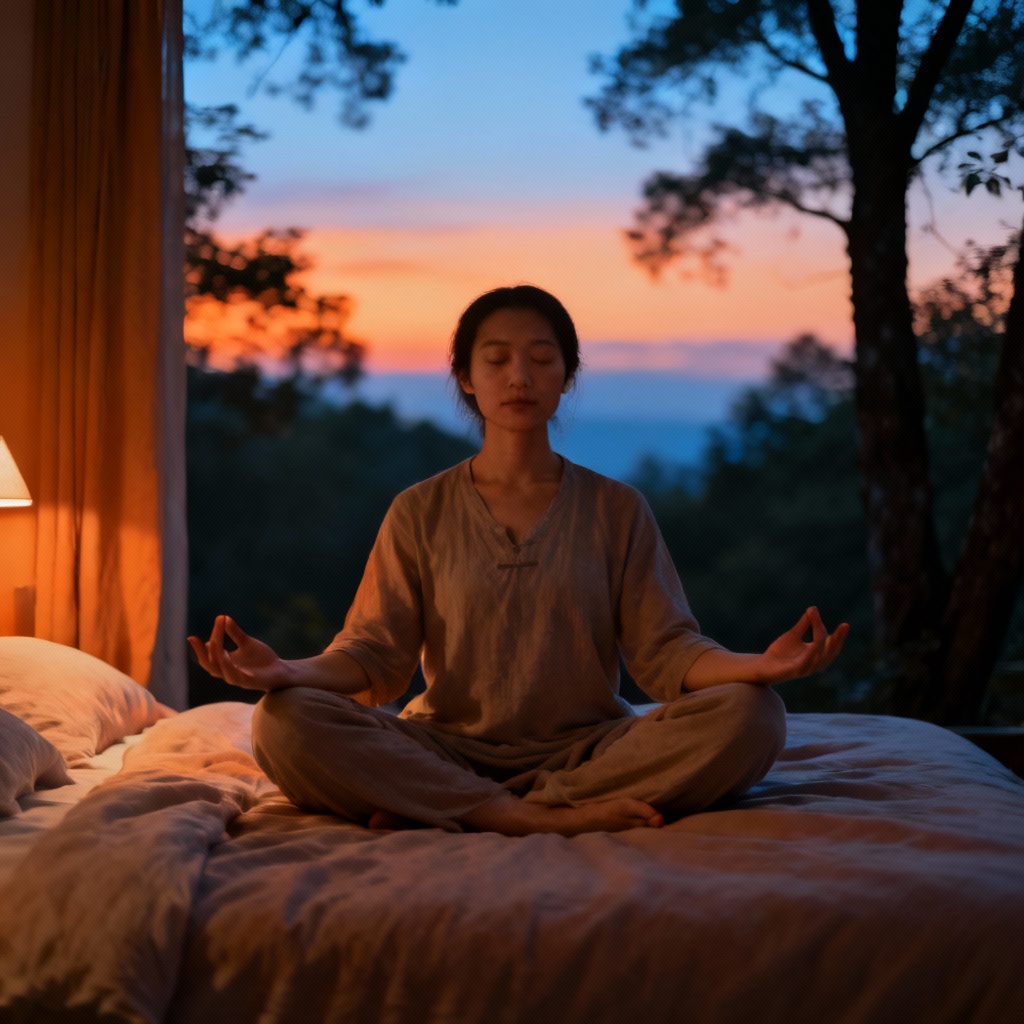
Modern science views Qigong as a powerful mind-body relaxation technique. It combines deep abdominal breathing with slow, mindful movements. Focused intention completes this calming triad. Long-term practice is incredibly beneficial. It significantly reduces anxiety levels (PMID: 29478330). Qigong also effectively regulates your autonomic nervous system. This regulation improves overall sleep architecture. You experience deeper, more restorative sleep cycles. It’s a holistic sleep aid that truly works. Recent research consistently supports these profound benefits (PMID: 25287610).
Engage Your Core: Deepen Relaxation
Abdominal breathing stimulates the vagus nerve. This action triggers your body’s relaxation response. Deeper breathing enhances oxygen flow throughout your system. Increased oxygen calms your nervous system. A relaxed core promotes profound rest.
Slow Your Pace: Harmonize Your System
Deliberate, unhurried movements reduce physical tension. They encourage smoother circulation of energy. This rhythmic practice synchronizes your body and mind. A harmonious system invites natural sleep. It allows your body to truly unwind.
Cultivate Focus: Achieve Mental Clarity
Concentrating on movements and breath stills the mind. This mental clarity quiets racing thoughts. It creates a tranquil mental space. A peaceful mind easily drifts to sleep. This focus is a cornerstone of effective sleep-enhancing Qigong.
Many traditional Qigong forms are excellent for improving sleep. Popular practices include Baduanjin, Daoyin, and Tai Chi. These forms offer accessible entry points for beginners. We recommend practicing for 10-30 minutes daily. Morning and evening sessions are especially effective. Focus on slow, gentle movements and quiet contemplation. Consistency is key for lasting results. For more details on these forms, visit /tcm-basics/qi-gongtai-chi/. If you suffer from severe illness, please consult a healthcare professional. Alternatively, seek guidance from a certified Qigong instructor. Regular practice of Qigong for Sleep can profoundly improve your quality of rest (PMID: 31057403).
Practice Daily: Build Consistent Calm
Daily sessions reinforce relaxation pathways. Consistency trains your body and mind. This regular routine establishes a new sleep habit. Regular practice offers cumulative benefits. You will feel increasingly calm.
Go Slow: Embrace Gentle Healing
Gentle movements prevent strain or discomfort. This calm approach enhances mindfulness. Slowness allows deeper energy integration. Healing happens more effectively. Your body responds positively to gentleness.
Seek Guidance: Ensure Proper Form
A qualified instructor can refine your technique. Correct form maximizes the benefits. They offer personalized advice. Guidance prevents potential errors. This support enhances your overall practice. Start your journey with Qigong for Sleep today.
(Qigong significantly improves sleep quality, especially for chronic insomnia patients: PMID: 29478330)
(Systematic review and meta-analysis support Qigong’s positive effect on sleep in older adults: PMID: 25287610)
(Another systematic review confirms Qigong’s effectiveness for sleep quality in chronic insomnia: PMID: 31057403)
Self-Test & Self-Help Combo:
Self-Test (3 Seconds): Do you struggle to fall asleep, wake up frequently, or feel tired even after a full night’s rest?
Self-Help (30 Seconds): If you answered yes, then immediately try 30 seconds of gentle abdominal breathing: lie down, place one hand on your belly, inhale slowly through your nose, letting your belly rise, then exhale slowly through your mouth, letting it fall. Repeat five times. This quick technique helps initiate relaxation and invites the peace of Qigong for Sleep.
Medical Disclaimer:This article is for educational use only and is not a substitute for professional medical advice.